
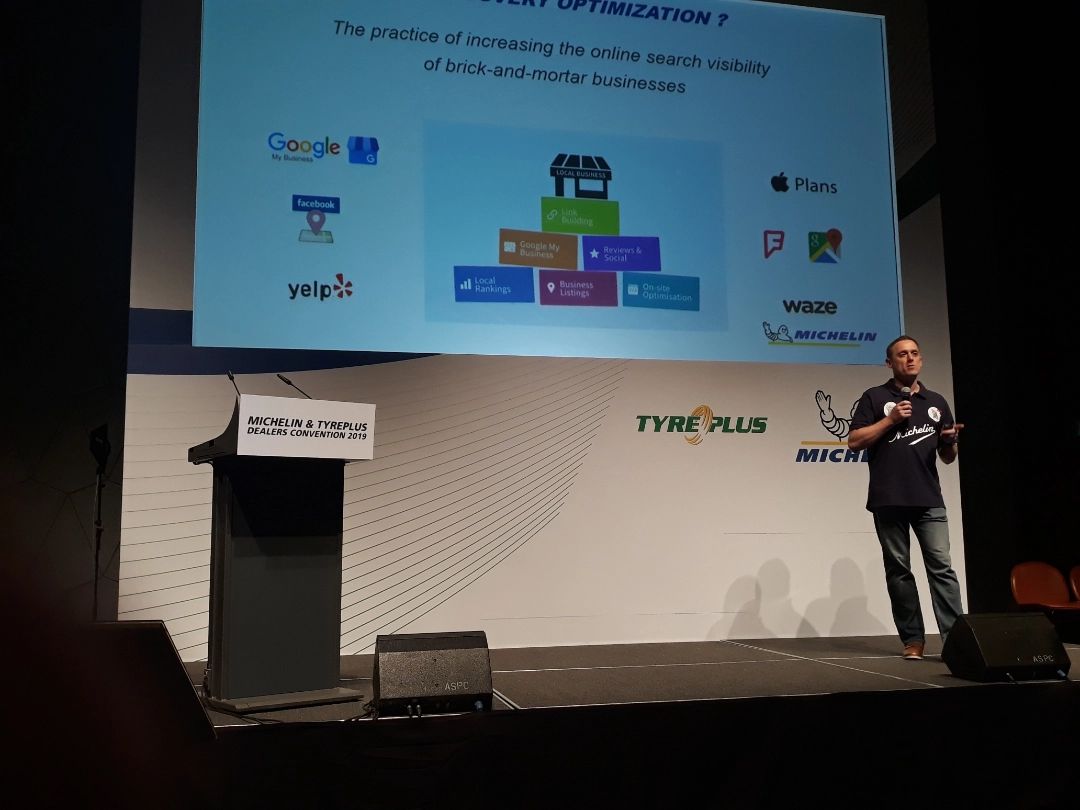
How Michelin Grew from 45,000 to 1.5 Million Monthly Leads Using Google Business Profiles
In short
When I pitched Google Business Profile as the low-hanging fruit in a final-round interview at Michelin East Asia & Oceania, the dealer network was generating roughly 45,000 customer actions a month. By the time the pilot had matured into a regional playbook across 14 countries, that number had grown to around 1.5 million a month: calls, direction requests, website clicks and bookings. No paid ads. No hacks. Just a small pilot, the right partners, and structured execution.
What this case study covers
- ›The interview moment that started the project
- ›Why Michelin was sitting on a 30x growth opportunity nobody had built a system for
- ›The operational reality across the region (the unglamorous bit)
- ›The reporting flywheel that turned scepticism into demand
- ›A practical checklist franchise and multi-location operators can run against their own network
- ›How to work with me directly, and where to start if you're smaller
The line that got the job
Before any of the results, this story started in a final-round interview. By the time I got to that conversation, I'd already sat through seven interviews. I'd heard the same digital themes most large companies talk about: better websites, better social, broader e-commerce, full-funnel transformation. All valid. None of it new.
So I said something different.
Google My Business is the low-hanging fruit.
That was the line that landed. At the time it was still called Google My Business. Today it's Google Business Profile, but the point is the same. When someone has a need and a postcode, Google is usually where the decision happens. They search, they compare reviews, they check opening hours, they tap "directions", and they choose. Most of that decision is made before anyone even visits a website.
The person across the table got it immediately. The opportunity wasn't to explain why local search mattered. It was to explain how Michelin could turn it into a measurable growth channel. That's how I got the role.
The role itself, for context, was Digital Platform Manager for the East Asia & Oceania zone. "Local SEO" wasn't a defined function inside Michelin when I joined, and GBP wasn't on anyone's roadmap. What I didn't know in that interview was that the team in Lyon at tyredating.com (the team that runs the dealer-locator and digital infrastructure for the network) had been quietly thinking along similar lines. The pitch landed because it met them halfway. Without that team, the rest of this story doesn't happen.

"Google My Business is the low-hanging fruit." Bibendum agreed.
Why this was bigger than listings
Most businesses still treat Google Business Profile as a listing. Name, address, phone number, opening hours, maybe a few photos. Set it once, forget it. That's the mistake.
For a franchise, dealer network, clinic group, hotel group, retail chain or service-area business, GBP is closer to revenue than most channels people spend ten times more money on. It sits at the exact point where search intent becomes action.
Someone searching for help near them isn't browsing for entertainment. They have a need. They're comparing options. They're trying to decide who to trust. That moment is commercial, and it happens inside Google, not on your website.
At Michelin, the raw ingredients were already there:
- Demand.People were searching for tyres, service centres and dealers every day.
- Locations.Hundreds of dealer points across APAC.
- Trust.A century-old brand most consumers already recognised.
- Infrastructure.A dealer locator and digital plumbing already maintained by the team in Lyon. Without that backbone, none of what followed would have scaled.
What was missing was the system that connected those four things at local level. That's where the 30x came from.
For context, the GBP pilot was one piece of a much larger regional digital portfolio, alongside the Blackcircles.co.th launch in Thailand, the "Buy Now" rollout on Michelin brand sites, the APAC PIM build, and campaigns like "Motion for Life". GBP just happened to be the one with the biggest local-visibility multiplier.
The real problem was operational, not digital
This wasn't an SEO problem. It was an operations problem dressed up as a marketing one.
Every country was different. Some markets had partial access to profiles. Some had little more than a few old logins kept in a folder of Gmail accounts. Some had no clear ownership at all. Inconsistency at scale is the default state, not the exception.
But from a customer's point of view, inconsistency is expensive. Across a network that size, small errors become big leaks:
- Wrong or inconsistent business names
- Weak or missing primary categories
- Services half-filled or missing entirely
- Outdated opening hours
- No review-response process
- Stale or low-quality photos
- No reporting at store level
- Nobody owning the channel
Individually, each of these looks minor. Across a network, they add up to lost calls, missed direction requests, lost trust and lost sales, every single month.
Getting the hands dirty
The pilot itself wasn't glamorous. None of the work that actually moves the needle ever is. The very first job was setting profiles up the slow way: one at a time, dealer by dealer. I was hands-on in the markets where I had the most direct relationships, mostly Australia and Thailand. Phone calls with dealer owners, talking them through how to add me as a manager on their profile, and explaining why a name like "Sulibar Trading Tyre Co Ltd." wasn't going to help a customer searching for a TyrePlus location near them, and why "TyrePlus — Sukhumvit 42" would.
In Thailand, where most dealer owners didn't speak English, Michelin's key account managers came along on the calls and translated. In other cases Michelin took me out to forecourts to sit with owners and walk them through it in person. The TyrePlus network is full of good people, and they were a pleasure to work with.
The proof, in one month.
In June 2019 we rolled the rename out across the whole TyrePlus dealer network in one coordinated push, aligning every store to the "TyrePlus — [Location]" convention. The network saw a 43% uplift in customer actions in a single month. One change. One month. No paid spend. That's how heavily Google weights the business name field for local intent.
A bit of luck worth naming.
TyrePlus came with a structural advantage that's easy to overlook: the keyword "tyre" sat inside both the brand name and the domain (tyreplus.co.th, tyreplus.com.au, and the country variants across the network). That alignment between what people search for and what the brand is called is a quiet but enormous advantage in local search. Takeaway for any new business: if you can put the category keyword in your brand and your domain, do it. It's free leverage every other channel will benefit from for the life of the business.
In the markets where I couldn't speak the language, that work was done by local SEO agencies on the ground, briefed against the same standards. Country digital leads owned the relationship with their dealers. The Lyon team kept the data and dealer feeds flowing underneath all of it. My job was to set the standard, prove the numbers, and make the case to expand. Their job was to actually run the network. Both jobs mattered.
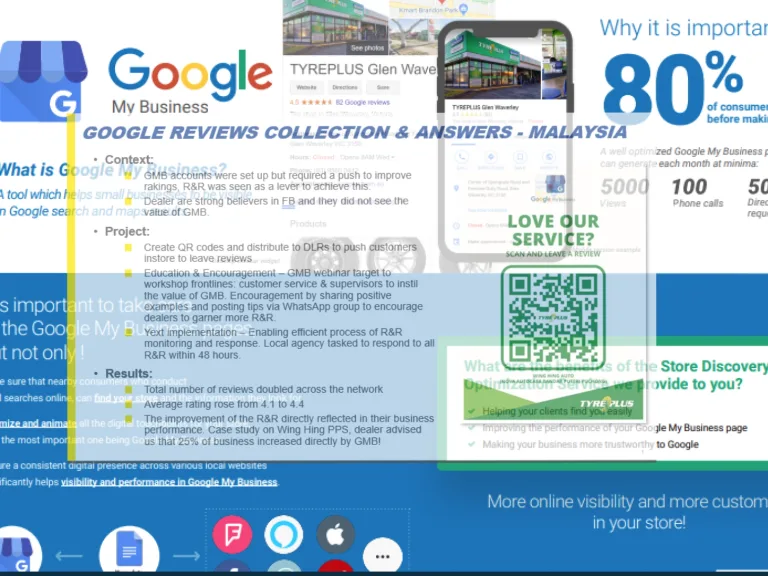
Sample literature given to dealers, making the "why" tangible enough that a tyre shop owner in Kuala Lumpur would act on it.
Once enough profiles were under management and the pilot had earned trust, the work shifted gear. Michelin assigned me an email address that Google had verified for the network, which meant I could edit any TyrePlus profile in the region without per-listing approval. From there, NAP consistency stopped being a per-dealer phone call and became a data exercise. We pulled Michelin's master dealer records, reconciled them against what was actually live on Google, and pushed corrections in bulk using Google's standard CSV upload format. That's how the network stayed clean without a phone call a week per dealer. It's also why centralised control of the GBP estate matters: if someone has the keys to that many profiles, you want them accountable to head office, not lost when a store manager changes job.
That's why the system mattered. Not a one-off optimisation. A repeatable operating model. Here's what we built it around:
- Audit the existing local visibility, store by store. Profile completeness, categories, business names, hours, services, photos, review activity, calls, direction requests and website actions.
- Standardise what "good" looks like. A clear baseline every market could work to: correct primary category, relevant secondary categories, consistent NAP, proper hours, strong descriptions, services completed, current photos, an active review-response process and a regular update cadence.
- Measure customer actions, not rankings. Calls, direction requests, website clicks, bookings, store visits where measurable. Rankings move with device, history, proximity and intent. Actions are what operators understand.
- Build ongoing activity into the rhythm. Reviews, replies, photos, posts, local content, profile updates. A neglected profile sends weak signals to Google; an active one sends stronger ones.
- Report relentlessly, store by store, every month. This was the unlock.
Stage two of the work was consolidating the TyrePlus web presence. Across the region we'd been running individual dealer websites, often inconsistent, often outdated, often invisible. We collapsed those onto a single master TyrePlus site with one page per location. That made every store's web destination genuinely hyperlocal: the content, the schema, the imagery, the reviews, all aligned to the place. GBP became the discovery layer. The location pages became the landing layer. The two reinforced each other, and the signals Google was reading on both ends started telling a consistent story.
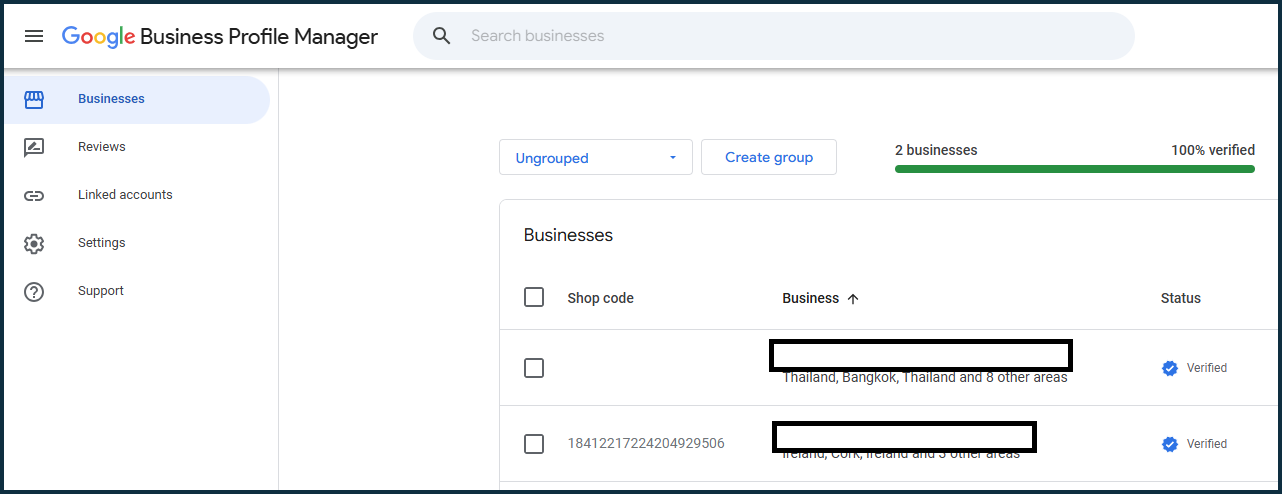
The kind of raw GBP data we were working with: unstructured, inconsistent, and full of opportunity once a system was in place.
The reporting flywheel that changed everything
From month one, we built reporting. Store by store. Market by market. Action by action. The model was mine; the data feeds and dealer reconciliations came from Lyon. Without their plumbing, there's no chart. This was the most important decision in the entire programme.
Without reporting, local SEO is invisible. And when work is invisible, it's easy for people to ignore, or worse, to defund. Once teams could see store-level movement on a chart with their own dealer's name on it, the conversation shifted entirely.
Why are we spending time on Google listings?
How do we get more of this?
That's when the flywheel started. The more results we showed, the more teams wanted in. The more teams joined, the more consistent the network became. The more consistent the network became, the more customer actions grew. As the pilot started landing, my n+1 in France would occasionally ask me to spend a day with another country team that wanted to know what we were doing. That happened a handful of times across other regions over the four years.
The work also widened beyond GBP. A fair chunk of my time went into the eRetail Academy: training country teams on ratings and reviews at the major online retailers, eContent, Digital Authority Rankings, and joint planning with the bigger eRetailers. The local-visibility playbook sat alongside that, not in place of it.
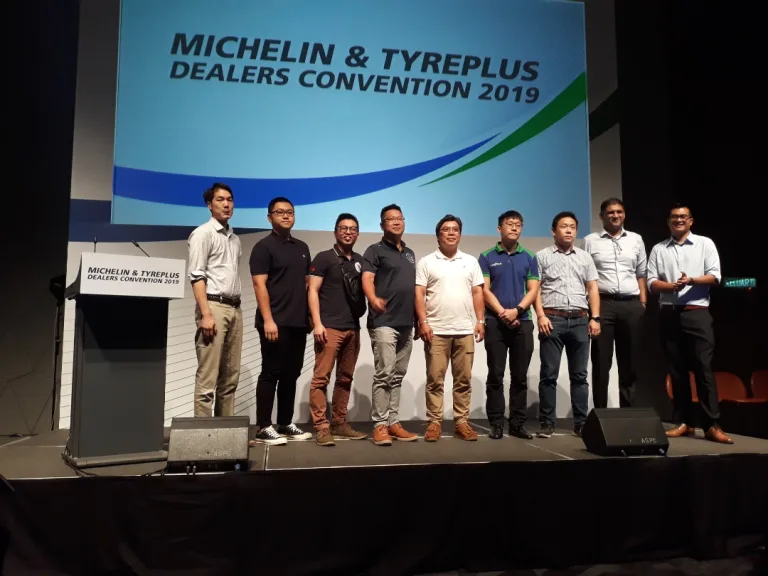
The dealer-level proof
The corporate numbers were huge. But they aren't what stayed with me. What stayed with me was a TyrePlus dealer convention in Kuala Lumpur, set up by the Malaysian country team. I'd presented to the Malaysian network, walked them through what we were doing and why it mattered. Later that night, dealers came over to thank me. Not because they cared about digital theory. Because they'd seen the impact in their own businesses: more phone calls, more walk-ins, more people pulling into the forecourt.
Local visibility is only valuable if it helps real local operators get more customers. Every country had its own version of that story. That's when the project stopped being a project. It became a playbook. One I'd like to think Michelin and the Lyon team have built on since.
Local visibility is only valuable if it helps real local operators get more customers. Everything else is theatre.
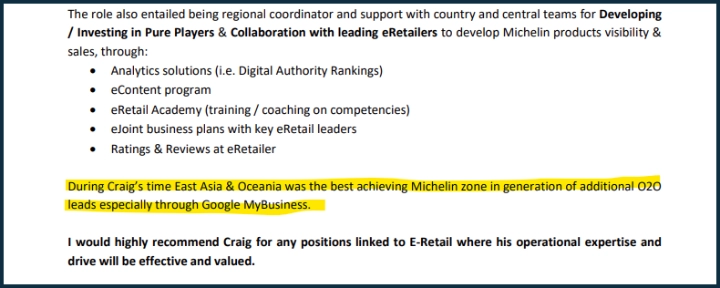
Recommendation from Michelin, documenting the results of the Google Business Profile programme across the network.
During Craig's time East Asia & Oceania was the best achieving Michelin zone in generation of additional O2O leads especially through Google MyBusiness.
What I didn't crack
Honest gap. The biggest piece I didn't get right at Michelin was call tracking. Closing the loop between a GBP click-to-call and an actual tyre fitted at the forecourt was the one part of the system that stayed messy from day one to the day I left.
We did set a call-tracking solution up in the end, and it was hit and miss. Call tracking is hard work at the best of times. The vendor market is patchy. The bigger problem is that call tracking usually means replacing the dealer's own phone number with a tracked number that forwards through to them, and dealers really don't like that. It's their number. It's been on their shopfront and their van for years. Asking hundreds of independent operators to change the number on their GBP listing for the sake of head-office attribution is a hard sell, and a fair share of them say no. None of that is Michelin-specific. It's the same story across most multi-location networks I've worked with since.
The harder gap was at the store end. In Thailand, and across most of the markets GBP was driving traffic into, there was no track-to-store layer at retail. We could see calls and direction requests leaving Google. We couldn't reliably see which of those turned into a customer through the door. That's the loop I never had time to close.
What franchise and multi-location operators should take from this
If you run a franchise, dealer network, branch network, clinic group, hotel group or retail chain, your Google Business Profiles are already influencing sales. The only question is whether anyone is managing them like they matter.
Here's the practical checklist I'd run any network against, the same questions we worked through at Michelin, simplified:
- Ownership. Who owns every profile? Is it consolidated, or scattered across personal Gmail accounts at store level?
- NAP consistency. Is the business name, address and phone number identical everywhere it appears: Google, your website, directories, Apple Maps?
- Categories. Is the primary category right for what the customer is actually searching for? Are the right secondary categories in place?
- Services. Are services complete, accurate and matched to local search demand?
- Photos. Are they current, branded, and showing the inside of the location, not just the logo?
- Reviews. Is there a process for asking, replying, and flagging? Are negative reviews being handled?
- Hours. Are they accurate, including holiday hours?
- Posting. Is there any activity rhythm at all, or is the profile inert?
- Reporting. Are customer actions being tracked by location? Can head office see who's winning and who's leaking?
The fix isn't complicated. It just needs structure, ownership, reporting and local teams trained to produce locally. That's it.
Why I'm still doing this work
Michelin was one of the most rewarding chapters of my career. Four years inside a 130-year-old brand, with the engineering culture and global footprint that come with it, changes the way you think about scale. I'm grateful for the trust the company placed in a small pilot idea, and grateful to the people who made it work: the team in Lyon at tyredating.com who built and maintained the digital backbone, the country digital leads who owned execution in their markets, and the local SEO agencies who delivered in the languages I couldn't speak. I didn't do any of it on my own.
Before Michelin, I already believed in local SEO. I'd built a local SEO service at Smart Traffic and managed online visibility across hotel locations at MBK.
Michelin changed the scale of that belief. It showed me what happens when local visibility is treated like an operating system instead of a side task, and what's possible when the right partners sit underneath the work. It also showed me how many businesses are sitting on the same opportunity without realising it.
One of the conversations we started having from day one of the pilot was about conversational search. At the time it was still mostly a curiosity. Today, with Ask Maps and AI-driven local discovery moving from experiment to default, it's the direction the entire local visibility category is heading. The work that mattered for GBP rankings (accurate data, useful descriptions, real reviews, fresh local content) turns out to be exactly what conversational and AI surfaces feed on. The principles haven't changed. The surfaces have. That's the bet I'm still making.
That's why I built CTB Digital Marketing: to take enterprise-grade local visibility thinking and turn it into something franchise and multi-location operators can actually run. And it's why I built Rank-in-Maps, because not every business is ready for, or needs, a full consulting engagement.
Frequently asked questions
What does "leads" mean in this case study?
GBP customer actions (calls, direction requests, website clicks, messages and bookings) as reported inside Google Business Profile insights. We use "leads" as the everyday word for those actions because that's how operators talk about them.
What does "free" mean?
No paid advertising spend on Google Ads or any other paid channel to drive these GBP results. The work itself required strategy, internal buy-in, agency support, training, and relentless execution. None of that is free in time or effort terms.
What was the single biggest lever you pulled?
A network-wide rename in June 2019. Every TyrePlus dealer profile was moved to the format 'TyrePlus — [Location]' in one coordinated push. Customer actions across the network rose 43% the following month, with no paid spend and no other simultaneous changes. That's how heavily Google weights the business name field for local search intent.
Was the growth Michelin-only or across the whole TyrePlus network?
Both. The programme covered Michelin and TyrePlus dealer locations across APAC and Oceania, with execution adapted to each market's resources, language and digital maturity.
Could a smaller business get the same kind of growth?
The growth multiple won't be the same. Michelin started from a base of hundreds of locations. But the principles work at any scale. In reality, a single-location business can start getting calls the same week a profile is set up properly. The compounding work (reviews, photos, posts, reporting) typically takes 60 to 90 days to settle into a rhythm. That's the whole reason Rank-in-Maps exists.
How long did the Michelin programme take to mature?
The flywheel started moving inside 90 days because reporting was in place from month one. Reaching the 1.5 million actions per month level took longer and depended on how quickly each market could be onboarded.
The same evidence layer, on a bigger scale
The name-field and reporting discipline that drove this programme is one piece of a bigger shift in how Google Maps builds trust in a business — see the field note on evidence optimisation for what's changed since.
Read the evidence-optimisation field noteWant help applying this thinking to your network?
I'd rather be honest about who I work with and how.
Direct engagement
A paid two-hour strategy consultation to pressure-test your current local visibility setup, identify the leaks, and give you a prioritised action plan. Or a direct engagement for a defined period, working with your team to build the standards, reporting and operating rhythm.
Let's talkRank-in-Maps
For smaller businesses, I built Rank-in-Maps. It takes the same principles we used at Michelin (structured audits, geogrid tracking, and automated reporting) and makes them accessible without a full consulting engagement.
Explore Rank-in-MapsSingle location instead of a network? book a strategy session for your own profile or see pricing.
Found this useful?
Share it with someone working on local visibility.
If this helped clarify how Google is changing local discovery, pass it on. You can also add us as a preferred source in Google so our updates are easier to find when we publish fresh work.
Google will open its source preferences tool. Tick the box next to CTB Digital Marketing to follow the site.